 |
 |
|
 |
|
Binkelman's Corner by Bill Binkelman |
|
|
|
|
|
|
|
|
Bill Binkelman is a long-time icon in the industry. |
|
|
|
|
|
|
|
|
|
|
|
|
|
|
|
|
|
 |
|
|
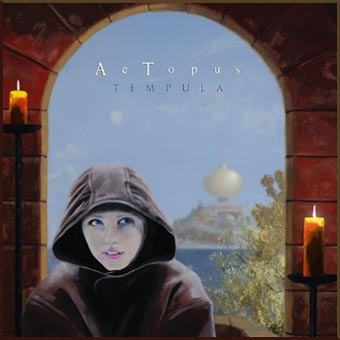
| Tempula |
| By AeTopus |
| Label: 12Ton Productions |
| Released 2/1/2006 |
|
| Tempula tracks |
1. Era Trans
2. The Day's Toil
3. Sky from Below
4. Convoque'
5. Sin of Conscience
6. Ish Nish Nish
|
7. Empiricist
8. Candles and Glass
9. Throne
10. Quiescent
11. Summit
12. Pneuma
13. Nearer, Clearer
|
|
|
|
|
|
|
|
|
|
|
Tempula |
|
|
|
|
|
is defined in the liner notes as "consecrated terrain or partitions of the sky, typically marked or enclosed, through which humans may interact with deities". Using this as a starting point, Bryan T. Hughes (aka Aetopus) has crafted an album that sits at the crossroads of an assortment of musical genres: new age, ethno-tribal, and melodic EM. The man has few, if any, contemporaries in his multi-dimensional approach to music, although if pressed, I would name Kudzu, and to lesser degrees, Jon OâBergh, Patrick OâHearn (only tangentially) and maybe Richard Bone or Frank VonBogaert. Kudzuâs collaboration with Peter Griggs, Children of the Amazon, may be the best comparison to make to Tempula, since both share a perfect melding of accessible new age melodies with the well-crafted techniques and instrumentation of EM plus plenty of ethno-tribal percussion interwoven throughout the songs to give the music an added dimension and a sense of primal/ritualistic themes. Unlike "Childrenâsâ¦South American flavor", Hughes has fashioned a type of music that belongs to no country and yet also all countries. Remarkable! It's all wrapped up in sterling production and engineering and the individual compositions are instantly enjoyable, yet never less than rich and complex.
As he did on his debut CD, Memories of the Elder, Hughes works in relatively short track format, with only three of the thirteen songs clocking in at between 6 and 7 minutes. By interweaving some common keyboard and percussion sounds, and building on common tempos and thematic elements, Hughes unites the separate cuts into a cohesive vision which carries with it strains of tribal spirituality, awe, power, passion, and a more than a whiff of the sensation of ancient ceremonies, portrayed through the CDâs flowing melodies, pulsing drum beats, and EM/new age electronic textures.
Much of the music is uptempo and features both a melodic component (from overt EM to new age to something in-between) and a rhythmic one, almost solely based around a variety of ethnic hand percussion. Track titles, while cryptic, hint at ritual/spiritual themes: , , , and . One thing about Tempula is that much of the time the music is powerful and catchy, although there are subdued moments as well. There are also a few spoken word vocals at times, in an imaginary language (per Hughes), but they are sparse so donât be put off by my mentioning their presence. also contains some nicely done male/female hymn singing in another made-up tongue.
Genre-classifying Tempula is difficult. The percussion elements lend an air of world fusion to some cuts, but the music borrows heavily from EM and electronic new age so I tend to regard it as an ethno-tribal/EM/new age hybrid. Itâs probably too unique to be reduced to a strict category. Sky from Below may remind you of Tuu or o yuki conjugate, while put me in mind of Geodesiumâs Anasazi (another excellent basis for comparison, being very similar to Tempula). is almost entirely EM with dark and shadowy keyboards and synths employing both textures and melody with equal finesse.
Try as I may to clearly delineate the characteristics and appeal of Tempula, what Iâm left with is simply that this album kicks a hundred kinds of ass. The only folks that it wonât appeal to are hard core Eno-esque ambient-philes, as thereâs too much structure, melody, and rhythm for them, I fear. As for the rest of you, I urge you to grab a hold of this album pronto. Itâs just way too cool to not have in your collection. |
|
|
|
|
|
Rating: Very Good  |
|
|
|
|
|
|
|
|
- reviewed by Bill Binkelman on 4/27/2006 |
|
|
|
|
 |
|
 |
|
|


